
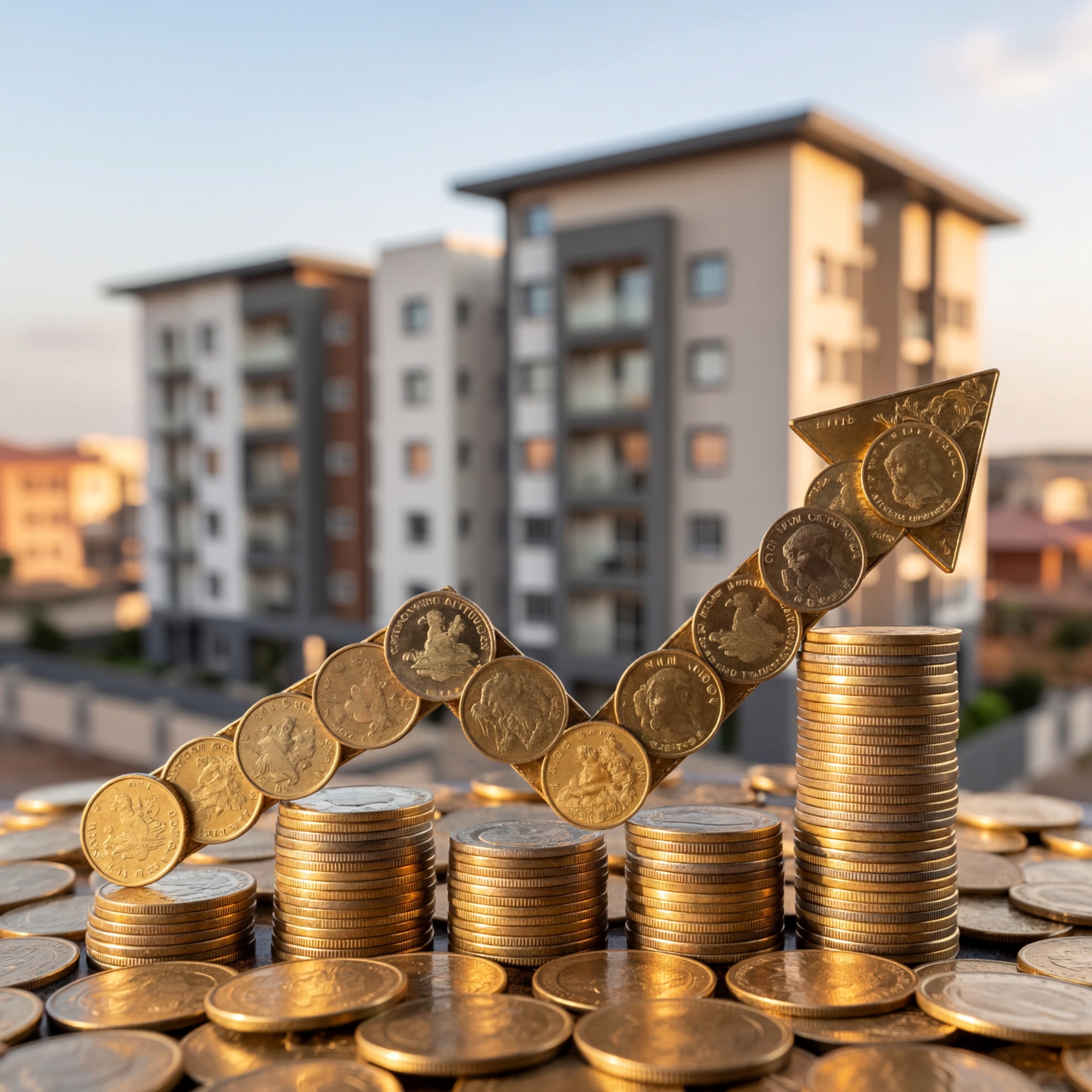
Nigeria’s economy has never been short of turbulence. From the naira’s persistent devaluation and double-digit inflation to fuel subsidy removal shocks and rising interest rates, Nigerians face a financial landscape that would unsettle even the most seasoned investor. Yet, through every cycle of boom and bust, one asset class has stood firm: real estate.
If you’ve been wondering whether property investment in Nigeria is still worth it in 2025, the short answer is: absolutely yes. In this post, we break down exactly why real estate continues to be the safest, most reliable investment you can make in Nigeria today, and how you can position yourself to benefit from it.
The Nigerian Economy and the Case for Tangible Assets
Before we explore real estate’s unique advantages, let’s acknowledge the elephant in the room: Nigeria’s economic challenges are real.
The naira has lost significant value against the dollar over the past few years. Inflation has hovered in double digits. Interest rates from the Central Bank of Nigeria (CBN) have made borrowing expensive. Many Nigerians who kept their savings in cash or low-yield bank accounts have watched their purchasing power erode quietly and steadily.
This is precisely why tangible, physical assets like land and property have become the preferred store of value for smart Nigerian investors. When paper currency loses value, land doesn’t disappear. When inflation rises, so do property prices and rental income. Real estate is the hedge that works.
7 Reasons Real Estate Remains the Safest Investment in Nigeria
1. Land Is a Finite, Appreciating Asset
Nigeria’s population is projected to hit 400 million people by 2050, making it one of the most populous nations on earth. More people means more demand for housing, commercial space, and infrastructure, and there is only so much land to go around.
In cities like Lagos, Abuja, Port Harcourt, and Enugu, land values have consistently appreciated year on year, even during periods of economic recession. A plot of land purchased in Lekki, Lagos in 2010 for ₦3 million could easily be valued at ₦80 million to ₦200 million today, depending on the location. That is wealth creation that no savings account can replicate.
Key takeaway: Land supply is fixed. Demand keeps growing. Prices go up.
2. Real Estate Protects You Against Naira Devaluation
One of the greatest fears for Nigerian investors is currency risk, the risk that the value of the naira falls while your money sits idle.
Real estate is a powerful hedge against this. Property values in Nigeria, particularly in Lagos and Abuja, are often benchmarked against the dollar. As the naira depreciates, property values denominated in naira tend to rise correspondingly. Rental income from commercial and high-end residential properties is sometimes collected in USD or adjusted to reflect exchange rates.
This means that even as the naira weakens, your real estate investment largely preserves or grows its real value in ways that naira-denominated savings simply cannot.
3. Rental Income Provides Consistent Cash Flow
Unlike stocks or treasury bills that offer periodic, sometimes unpredictable returns, rental property generates regular monthly or annual income for the investor.
Nigeria has a massive housing deficit. According to various industry estimates, the country’s housing deficit stands at over 28 million units. This shortfall means that demand for rental accommodation far outstrips supply in virtually every major city. Vacancy rates for well-located properties remain low, ensuring that landlords rarely go long without tenants.
Whether it’s a mini flat in Surulere, a two-bedroom in Gwarimpa, a short-let apartment on Victoria Island, or a commercial space in Ikeja, income-generating real estate offers a dependable cash flow stream that helps investors cover expenses, reinvest, or build wealth over time.
4. Real Estate Offers Multiple Exit Strategies
One of the things that makes property investment uniquely resilient is the variety of ways you can monetise your asset:
- Long-term rental: Lease to residential or commercial tenants for steady annual income.
- Short-let / Airbnb: High-yield, short-term leasing popular in cities like Lagos and Abuja, often earning 2–3x the rate of long-term leases.
- Outright sale: Capital gains from property appreciation, especially in developing corridors.
- Joint ventures: Partner with developers to build and sell units, earning profit without large upfront costs.
- Redevelopment: Convert or rebuild on existing land to increase its value significantly.
This flexibility means that regardless of market conditions, investors can always find a strategy that works for their current situation.
5. It Is Harder to Lose Land Than Other Assets
Ask any Nigerian who has lost money in equities, crypto, cooperative societies, or Ponzi schemes, and they will tell you the same thing: “I wish I had just bought land.”
Real estate, unlike digital assets or financial instruments, cannot be wiped out overnight by a market crash, a hack, a fraudulent operator, or a regulatory clampdown. Your property remains a physical, verifiable asset that exists regardless of what happens to the naira, the stock market, or the global economy.
Of course, real estate has its risks. Land grabbing, title disputes, and fraudulent documentation are genuine concerns in Nigeria. But these are manageable risks that due diligence, proper title verification, and working with reputable developers can significantly reduce. The asset itself does not disappear.
6. Real Estate Builds Generational Wealth
One of the most powerful but underappreciated advantages of property investment in Nigeria is its role as a generational wealth vehicle.
Land and buildings can be passed down from parent to child, building a family’s asset base across decades. Many of Nigeria’s wealthiest families trace their financial foundations to real estate holdings accumulated decades ago. In a country where pension systems are unreliable and formal financial safety nets are weak, property ownership gives families a form of long-term security that is deeply rooted in tangible value.
Investing in real estate today is not just about your financial future. It is about creating a solid foundation for the generations that come after you.
7. Growing Urbanisation Fuels Long-Term Demand
Nigeria is one of the fastest urbanising countries in Africa. Lagos alone adds thousands of new residents every week. Abuja continues to grow as a political and commercial hub. Cities like Ibadan, Owerri, Asaba, and Uyo are rapidly expanding as economic activity decentralises.
This sustained wave of rural-to-urban migration creates a perpetually expanding market for housing, retail spaces, schools, hospitals, offices, and logistics facilities. For real estate investors, this translates to one thing: demand will not stop growing for the foreseeable future.
Whether you invest in residential, commercial, or mixed-use properties, urbanisation ensures there will always be buyers and tenants for well-located real estate in Nigeria.
Common Objections: And Why They Don’t Hold
“Real estate is too expensive for me to invest in.”
Not necessarily. The entry point for real estate investment in Nigeria has broadened significantly in recent years. You can:
- Buy land in emerging corridors (e.g., Epe, Mowe, Lugbe, Idu) at relatively affordable prices before they appreciate.
- Join real estate cooperative societies that pool funds for property acquisition.
- Invest through Real Estate Investment Trusts (REITs) on the Nigerian Stock Exchange, which allow you to invest in property portfolios with smaller amounts.
- Participate in off-plan developments where payment is spread over time.
The key is starting small and starting early.
“I’m afraid of land fraud in Nigeria.”
Land fraud is a legitimate concern, but it is not a reason to avoid property investment entirely. It is a reason to invest carefully. Always:
- Conduct thorough title verification with a qualified lawyer.
- Buy only registered land with a Certificate of Occupancy (C of O) or other verifiable government documentation.
- Work with trusted, reputable real estate developers with a verifiable track record.
- Avoid deals that seem too good to be true.
“What about the cost of building materials and construction?”
Yes, the cost of construction has risen sharply in Nigeria due to inflation and naira devaluation. However, this same factor has increased the value of already-built properties, since it now costs more to build new ones. If you already own property or can acquire land in a growth corridor, you are positioned to benefit from rising replacement costs.
Where to Invest in Nigerian Real Estate Right Now (2025)
If you’re looking to invest, these locations offer strong growth potential:
- Ibadan: Oluyole, Bodija extensions, areas around the Ibadan-Lagos expressway
- Lagos: Lekki-Epe corridor, Ibeju-Lekki (around the Dangote Refinery), Ajah, Sangotedo
- Abuja: Gwarimpa, Lokogoma, Kuje, Gwagwalada, along the airport road corridor
- Port Harcourt: Trans-Amadi, Rumuola, GRA Phase expansions
Emerging smaller cities are also worth watching as infrastructure investment in roads, rail, and power shifts value creation beyond the traditional big four.
Final Thoughts: Property Is Still King in Nigeria
In a country where economic uncertainty is a recurring reality, the Nigerian investor who sleeps best at night is the one who owns land. Real estate is not a get-rich-quick scheme; it is a patient, strategic, and proven vehicle for building and preserving wealth in the Nigerian context.
Whether you are a first-time investor exploring a small plot in an emerging suburb, or a high-net-worth individual diversifying into commercial property, the fundamentals remain the same: land is scarce, population is growing, cities are expanding, and property values trend upward over time.
The economic storms will come and go. Your property will still be standing.
Are you looking to make your first real estate investment in Nigeria? Drop your questions in the comments below, or contact us for a free consultation on the best property options in your budget and location.

Join The Discussion